A Step-by-Step Guide to the Transfer Process at Otis College
Transferring is a big step but you don’t have to figure it out alone. At Otis, we’re here to help you navigate each stage of the process.
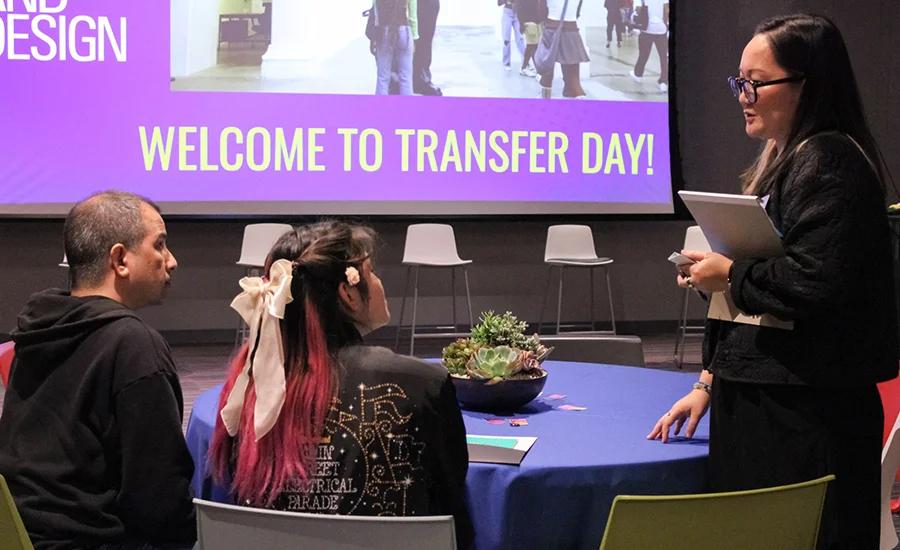
VP of Admissions and Financial Aid Yoi Tanaka (far right) greets families during a recent Transfer Day held at Otis College. Photograph by Kelania Phanthavong/Otis College of Art and Design.
Transferring colleges can feel overwhelming, especially when every school has different requirements. If you’re currently enrolled in school, you’re probably balancing coursework, deadlines, and big decisions about your next step. At Otis College of Art and Design, we aim to make the transfer process clear, supportive, and personalized.
Nearly 30% of Otis students are transfers and they often come from California community colleges, bringing diverse academic backgrounds, life experiences, and creative perspectives that strengthen our campus community. If you’re considering transferring, here’s a step-by-step guide to help you move forward with confidence.
1. Research
Begin by exploring Otis’s academic programs to see what aligns with your creative and career goals. As you browse, write down questions about majors, portfolio requirements, campus life, or career outcomes.
If you attend a California community college, be sure to review our articulation agreements and transfer guides, which will show you how specific courses may transfer to Otis at the sophomore level. If you’re still early in your college journey, this can help you choose classes that will transfer smoothly and keep you on track.
You can also attend a Virtual Transfer Info Session. These sessions provide an overview of Otis programs, the transfer process, and what makes our creative community unique. It’s a great starting point if you’re just beginning to explore your options. Our Virtual Financial Aid Info Session offers a great overview of how scholarships and aid can help you fund your Otis education.
2. Meet with an Admissions Counselor
One of the most helpful steps you can take is scheduling a one-on-one appointment with an Admissions counselor. You can meet in person, over Zoom, or by phone—whatever works best for you.
Our Admissions team regularly works with transfer students and understands the nuances that can make a big difference for a transfer student. During your appointment, counselors will:
- Review your unofficial transcripts and discuss how your credits may transfer
- Let you know which level you may be eligible to transfer into at Otis (first-year, sophomore, or junior)
- Review your portfolio – even if it’s still in progress
- Walk you through the application process step by step
- Suggest courses you can take now to maximize your transfer credits
- Answer questions about programs, student life, scholarships, or financial aid
After your meeting, Otis can provide a draft transfer credit evaluation. This shows you exactly which courses are likely to transfer and where you may need additional coursework. That clarity can make a big difference as you plan your next semesters.
Tip: Before your appointment, gather your unofficial transcripts and a selection of portfolio images. If you have AP, IB, A-Level, or dual-enrollment credits, bring those details.
And remember: you can meet with us more than once. Many students check in throughout the process to review updated transcripts, get feedback on new artwork, or simply make sure they’re on the right path.
3. Apply to Otis
When you’re ready, begin your application, during which you’ll gain access to a personalized portal with a clear checklist of required materials. The Admissions team will send you reminders to help you stay on track.
You can apply using either the Transfer Common Application or the Transfer Otis Application.
Tip: The Transfer Otis Application is free.
Starting your application early gives you more time to ask questions, request school transcripts, and refine your portfolio without feeling rushed.
4. Prepare Your Portfolio
Many transfer students worry that their portfolio must already match their intended major. That’s not always the case.
If you’re applying for junior-level placement, your portfolio should demonstrate strong preparation in your chosen major. However, if you’re applying at the first-year or sophomore level, we simply want to see your strongest work—regardless of medium or discipline. Show us your creativity, technical growth, and willingness to experiment.
We offer online portfolio resources and virtual portfolio development sessions. However, the most valuable feedback often comes from a one-on-one appointment with an Admissions counselor. We can give you personalized guidance based on your goals and intended level of entry. The strength of your portfolio also impacts the merit scholarship you are offered, so spending some time to make sure you’re on the right track is well worth it.
It’s normal to feel a bit nervous about sharing your portfolio but remember, we are here to help. Don’t hesitate to seek feedback more than once as your work evolves.
5. Take a Tour
If you’re able to make time to visit Otis College in person, attending a campus tour can help you picture yourself at Otis. Tours are offered Monday through Friday, with select Saturday options.
During your visit, you can explore studios, learn more about your intended program, and get a feel for the campus culture. Speaking with current student ambassadors can also give you honest insight into day-to-day life as an art and design student.
If you want to feel extra prepared, check out Student Ambassador Avery Plummer’s “Four Things to Ask Otis College Student Ambassadors On Your Next Campus Visit.”
Not able to attend a tour in person? Check out this virtual campus tour.
Final Advice: Ask Questions
No two transfer journeys look the same. You may be finishing an associate’s degree, changing majors, or returning to school after time away. Wherever you are in the process, you deserve clear answers and personalized guidance. Ask as many questions as you need.
Transferring is a big step but you don’t have to figure it out alone. At Otis, we’re here to help you navigate each stage of the process so you can focus on what matters most: growing as an artist and preparing for your creative future.
Learn more and register for a variety of information sessions.
Related News
Chris Eckardt’s Ongoing 26-Year Commitment to Otis College Students
September 02, 2026